
.
In the historic and atmospheric city of Bordeaux, a brutal murder shocks the quiet streets. Metalworker Armand Verville is found dead, his skull cracked open and his body discarded in the murky waters of the Gironde estuary. Capitaine Celestine Courbet of the National Police embarks on a relentless quest for justice, navigating a tangled web of secrets that reaches into the shadows of the Vietnamese criminal underworld, old alliances, and police corruption.
Joined reluctantly by Jacques Lecoubarry, a skilled furniture restorer and old friend of the victim, they uncover a sinister plot involving forged industrial parts loaded with illegal drugs, destined for the heart of European cities and nuclear facilities. With every discovery, the danger deepens, and loyalties fracture. As storms rage both on the estuary and in their lives, Courbet and Lecoubarry are drawn into a deadly game where the line between friend and foe blurs.
Weep for the Dead is a gripping tale of crime, betrayal, and survival, set against the evocative backdrop of Bordeaux's grand architecture, the mysterious Gironde estuary, and the haunting Cemetery of Chartreuse. The novel explores the price of truth and the human stories behind the headlines: those who live, those who fight, and those who weep for the dead.
Author's Note - This story was written as the prequel to the first book, The Devil's Point, and throws Celestine and Jacques reluctantly together for the first time, as they seek justice following the violent murder of Jacques' friend. However, as they are drawn deeper into a more dangerous and complex investigation, they begin to appreciate their skills and strengths. The title of the book, of course, refers to the inscription on the Great Bell in Bordeaux. I wanted to give the victims of the crimes a voice throughout the book and reflect on how their deaths affect the main protagonists.
Bordeaux is a wonderful city, full of history, culture, superb architecture, great wine and a fascinating cemetery. The Cemetery of Chartreuse does appear with great regularity in the book. We were talking to some Australian visitors and suggesting sites to visit in Bordeaux when I realised that we kept mentioning Chartreuse cemetery and had to explain that we were not, in fact, related to the Addams Family.
The Gironde Estuary and the Medoc Peninsula are the backdrop for much of the other action in the book, and these are wonderful picturesque settings, but they also have a mysterious and sinister side. The strong tidal currents of the estuary can be perilous for the unwary, as some will find out.
The story explores the French/Vietnamese connection, organised crime, police corruption, betrayal and careless murder. This is a fast-paced crime thriller, where police captaine Celestine Courbet risks everything to solve the crimes and at the end of it, realises that her life has changed forever.
Places that inspired the story
Weep for the Dead
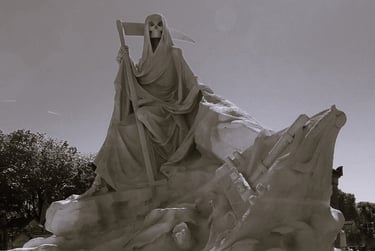
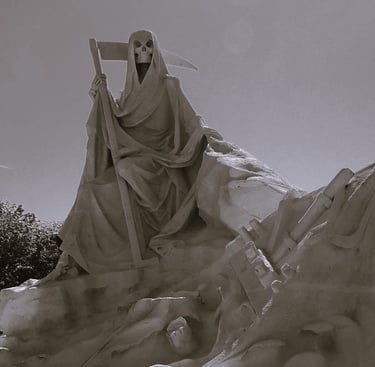
Cimetiere de la Chartreuse in Bordeaux was created in 1791 and was laid out in the former gardens of a Carthusian convent. It is literally called the suburb of the dead. Many of the stone carvings are quite exceptional, like the famous Angel of Death statue seen here.
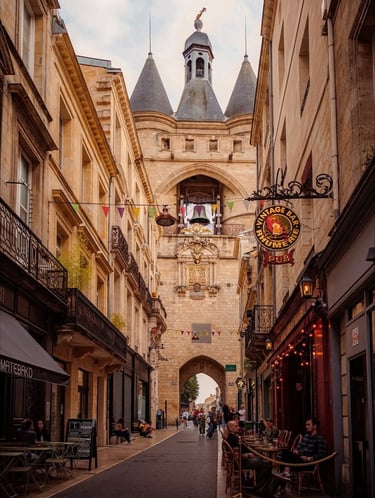
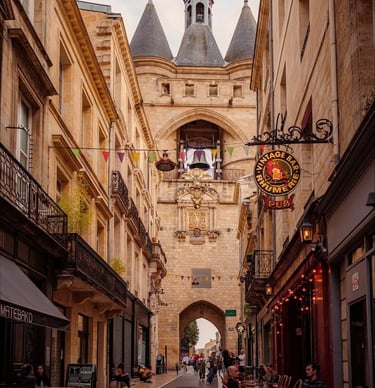
The Grosse Cloche at Bordeaux. baptised as Armande-Louise by the local population, is installed in the gate of Saint-Eloi in the medieval city walls. It is a beautiful edifice consisting of two 40-metre-high circular towers and a central bell tower housing a bell that weighs in at 7,800 kilograms. The clock is from 1759. The gate and bell tower form part of the city coat of arms.
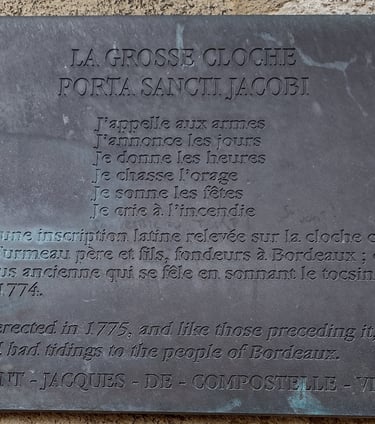
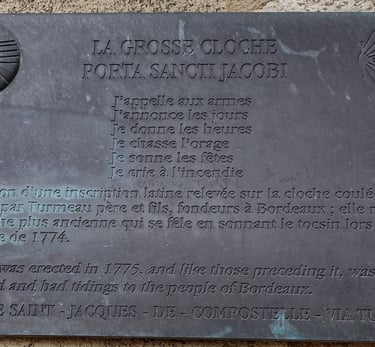
Inscribed on the 'belly' of the great bell are various coats of arms, and, in Latin, a list of the occasions when the bell should be rung. A plaque at the foot of the bell tower has the translation in French, but it appears to omit the last line. I have seen numerous translations, but the one I prefer in English, and included in the book is this:
I call to arms; I announce the days; I give the hours; I chase the storms; I sound the festivals; I scream at fires; I weep for the dead.
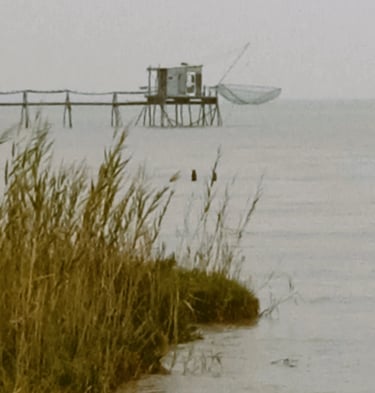
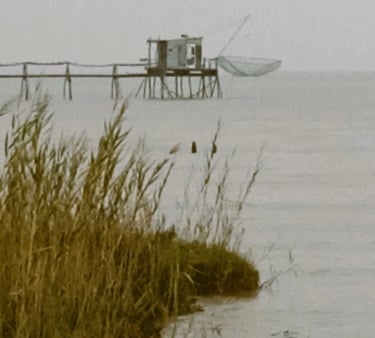
The Gironde is the largest estuary in western Europe, and is formed at the confluence of the rivers Dordogne and Garonne, which drain large areas of central and south west France. It has very strong tidal currents and can be treacherous for all manner of boats. The picture shows one of the carrelets, the picturesque wooden fishing huts found along the estuary side.


Click on the buttons to go directly to your store of choice.
Available on all Amazon stores worldwide, both as an E-book to download or as a paperback.
Available as an E-book on all Draft2Digital Stores; KOBO and FREE to read on Kobo Plus;
Now also as an audiobook on Apple Audio.